Building a TT:120 layout in 2026, what is available?

Building a TT:120 layout in 2026 is getting easier as more manufacturers are producing items in the scale. Heljan are making locomotives, and Peco are releasing TT:120 wagons.

Why TT:120?

TT:120 can be a great space saver while not losing detail. Moreover, you can fit a 1st radius oval of TT track on a 2′ x 4′ baseboard. However, not all locomotives can traverse 1st radius track. Notably, the locomotive in the starter set below can, but this set comes with 3rd radius curves.
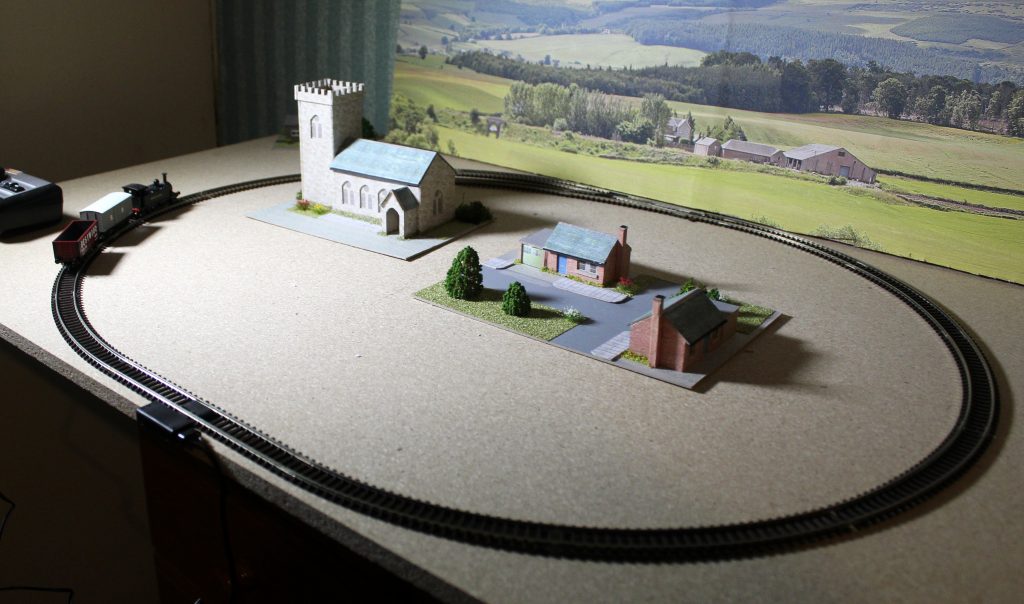
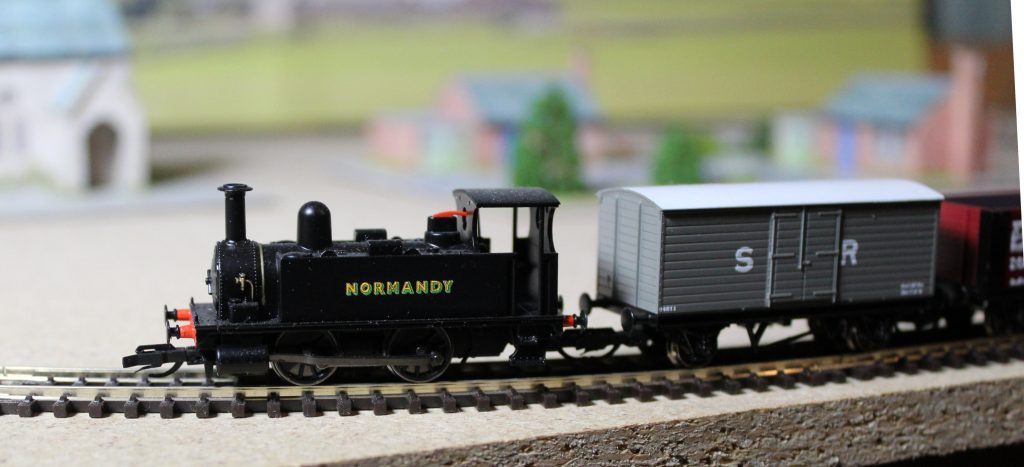
A 24″ x 48″ TT layout using 1st radius curves.

Train sets

Hornby has released a starter TT:120 train set that is less than £100. This is a good place to enter the otherwise expensive world of TT.
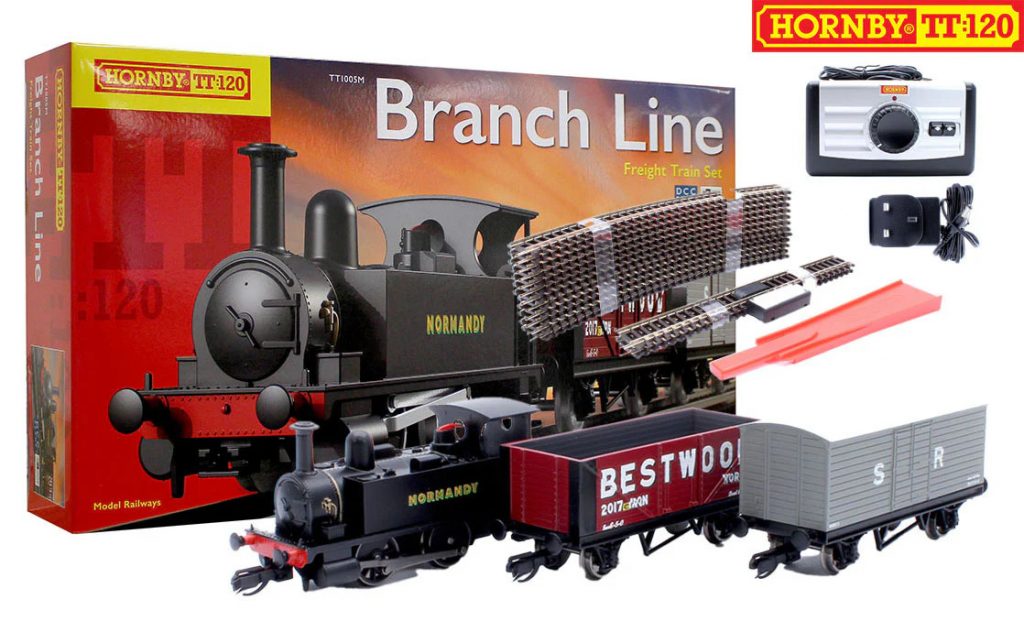
Hornby branch line starter set (affilate link)

Locomotives

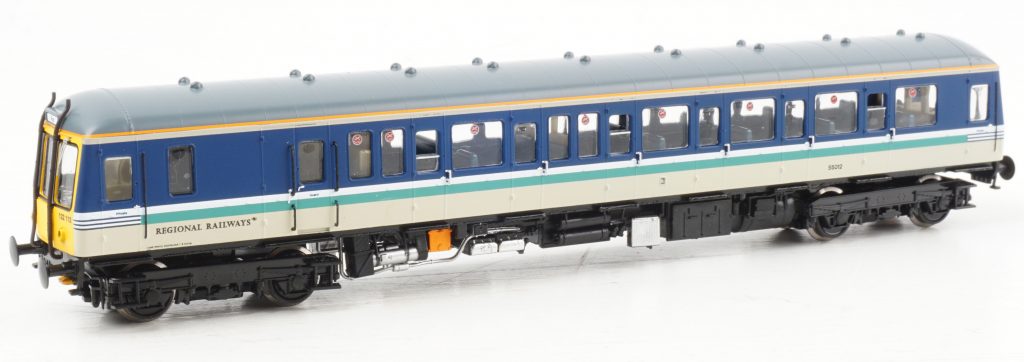
Heljan TT:120 Class 122 available from TMC

The main thing to note is that TT:120 locomotives come in three types: DC, DCC and DCC sound fitted. The DC types come with a pre-fitted decoder socket.

UK type TT:120 locomotives are available from Hornby and Heljan. If you are on a budget, there are some locomotives now appearing on the secondhand market. Below is a Hornby A4 Pacific for £79.95.
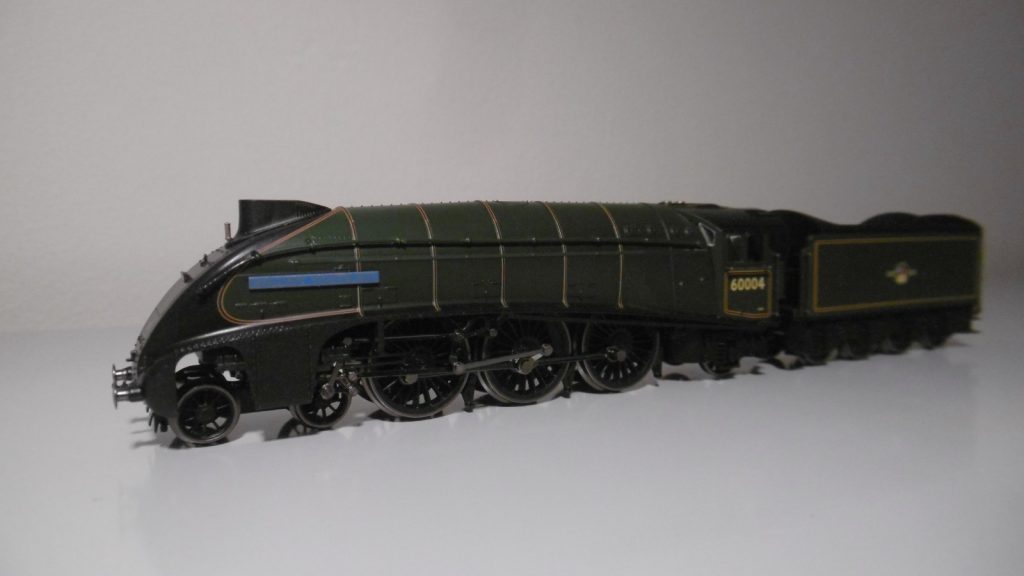
Hornby TT:120 A4 Pacific (affilaite link)

Track

Hornby TT:120 track is available in four radii. There are also points and crossovers.
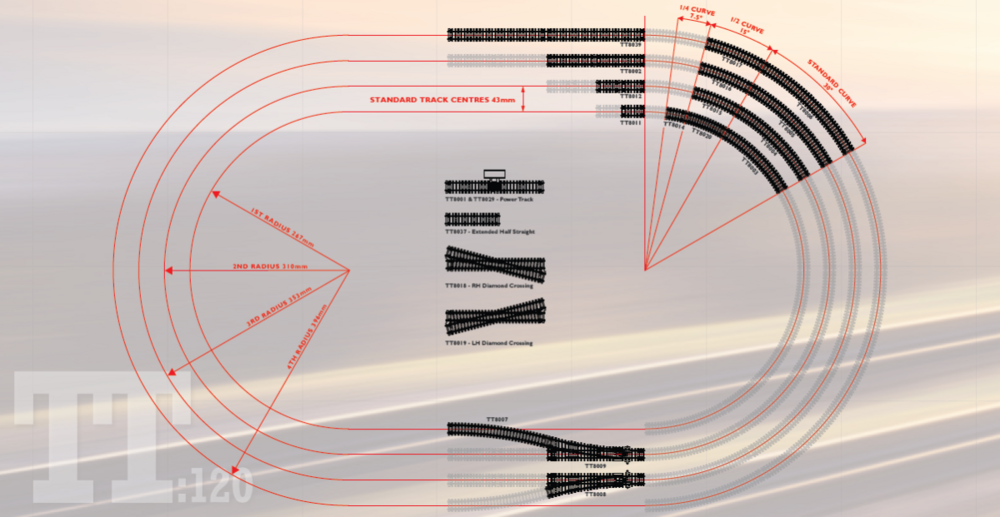
Basic ovals can be found on eBay.
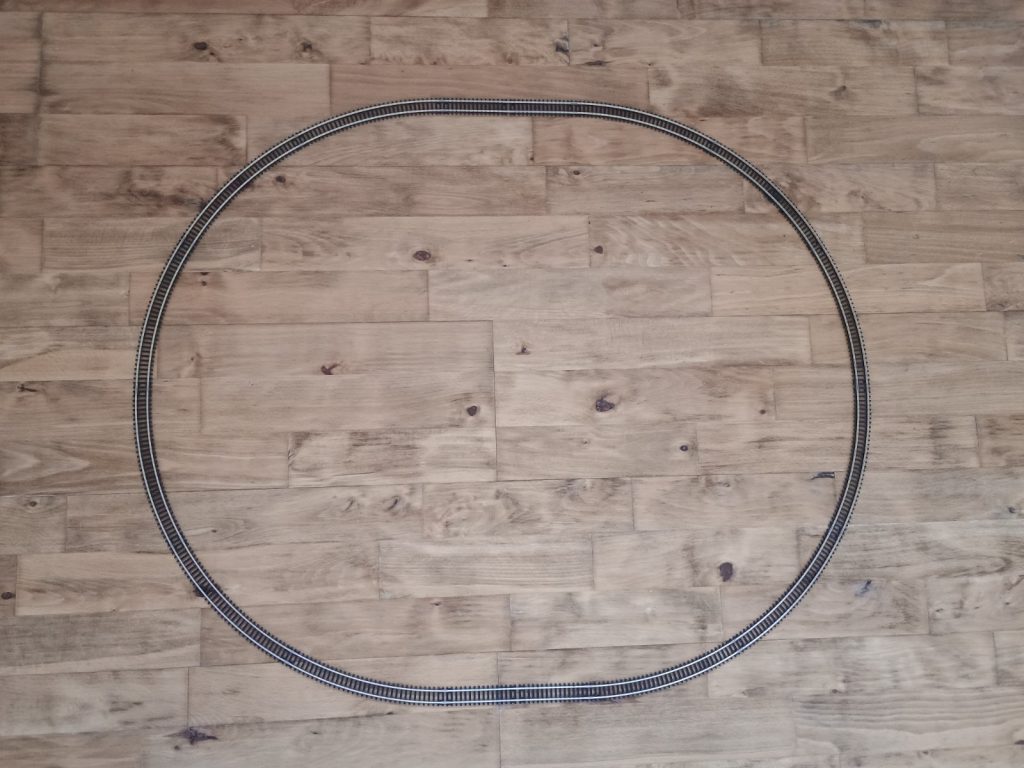
Hornby TT:120 3rd radius oval (affiliate link)

TT:120 Track is available from Hornby and Peco. There are basic ovals as well as extension packs.

Flexible track is available in boxes or as single lengths.
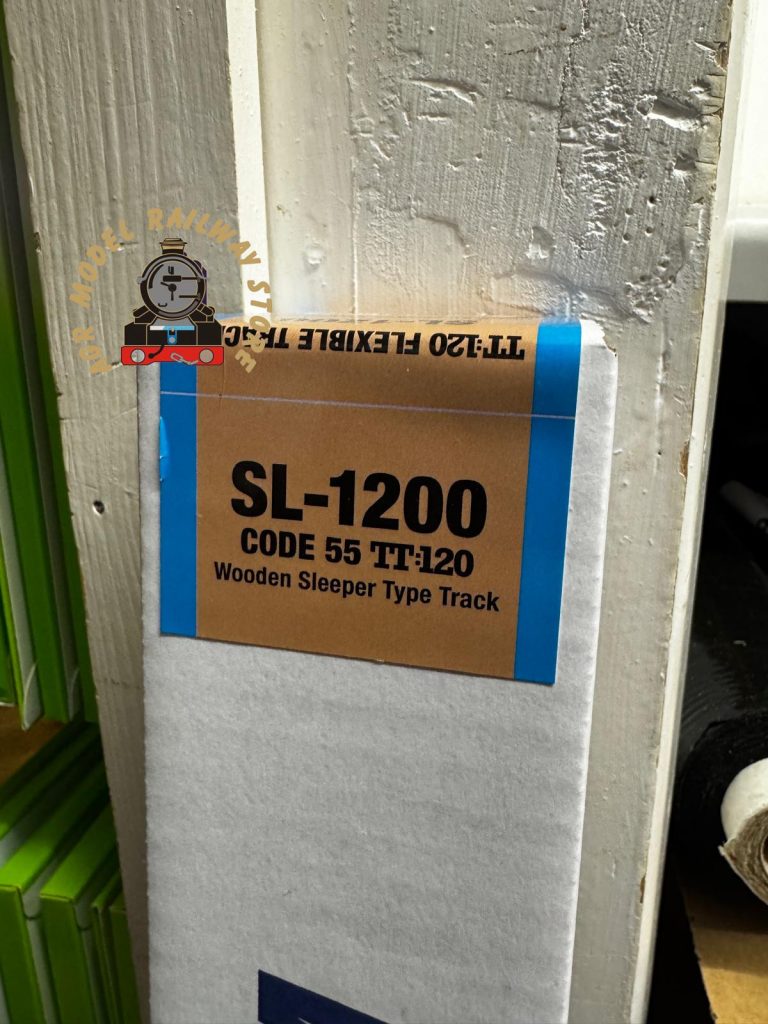
Peco TT:120 flexible track in box (affiliate link)

Rolling stock

Hornby and Peco make a range of wagons.

Vehicles
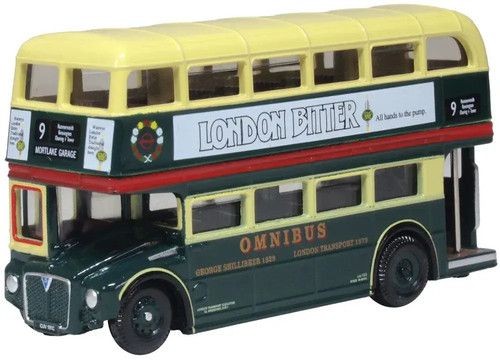
Oxford diecast TT:120 London Transport bus (affilate link)

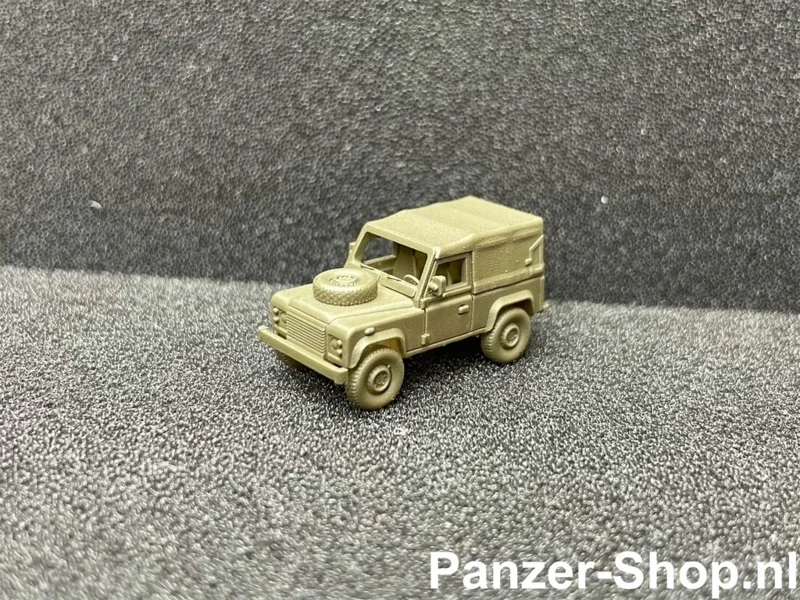
Road vehicles in TT:120 are still quite limited. Oxford Diecast has a small range of ready-to-use vehicles. Non-UK manufacturers also make UK-type resin vehicles that need painting. For example, Panzer Shop has a print-to-order TT:120 Land Rover available.
TT:120 Buildings

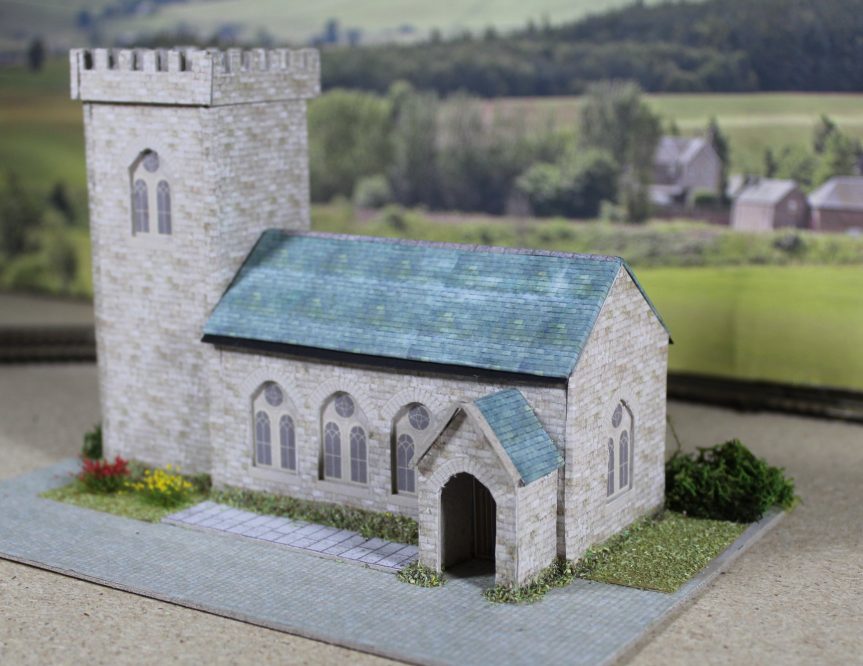
TT: 120 buildings are available on this site. There are also resin buildings from Hornby and a range of TT:120 laser-cut kits from , Peco, In The Greenwood and others.
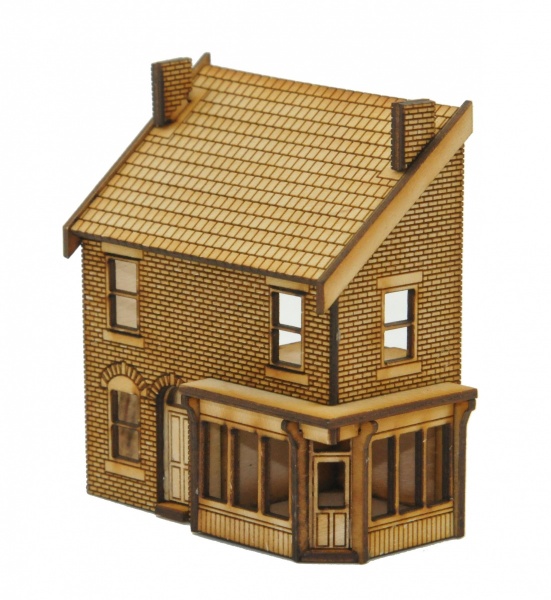
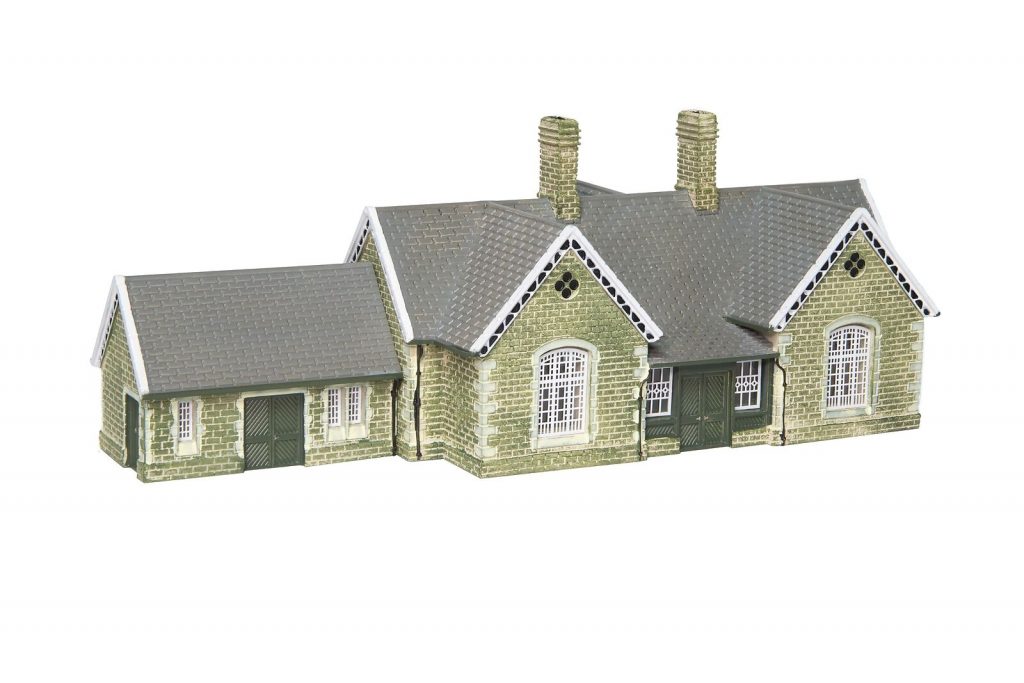
In the Greenwood TT:120 laser-cut kit
Hornby TT:120 ready-made building. (Affilate link)

TT: 120 Buildings from Classic Collect Models
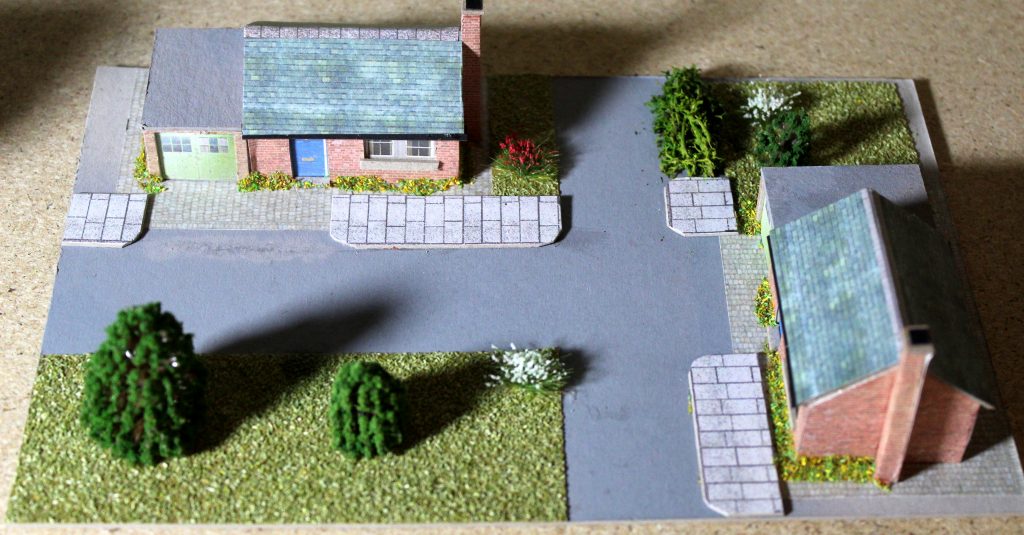
A TT:120 village green diorama exclusive to Classic Collect Models.

Animals and scenery

Guagemaster manufactures a set of farm animals.
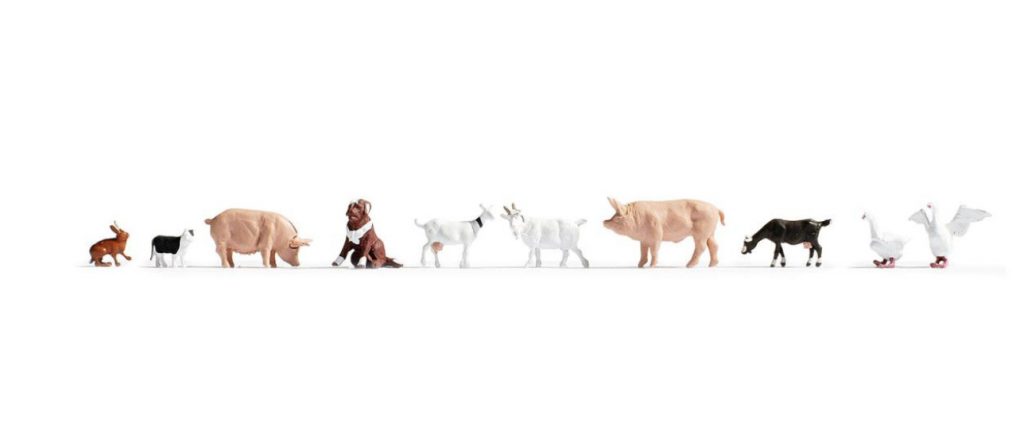
TT:120 farm animas from Gaugemaster (affilate link)

More Peco TT:120 laser-cut Buildings on the way

Already released is the Peco TT:120 Country station.

Buy the Peco TT:120 Country station on Amazon (Affiliate link): Peco TT:120 Country Station

The range of Peco lineside TT:120 kits continues to grow with several new announcements. All will be available in September 2025. The kits are based on buildings found at Ventnor West on the Isle of Wight. The first is a station building that can be built in two ways. Either as one building with a canopy or as two separate buildings with canopies.

Next is a small goods shed; there is also a new signal box on the way.

Building the ATD models 1970s office block in TT:120 scale.

ATD card-building kits are fairly new and this article uses two of them to build an attractive diorama in TT:120 scale. The kits used are the ATD13014 1970s office block and the ATD13023 Mess hut and store.

The ATD 1970s office block kit

The office block kit comes on several thin card sheets that are pre-cut. there is also a sheet of printed windows. Construction is fairly simple and begins with separating the walls from the sheets. The cut line is not very distinct and a metal ruler and knife are recommended for this. The two main walls overlap each other to add depth.

Main building assembly

Once the windows are fitted and the main walls are together the first floor is added. Tabs locate into cutouts in the walls to position the floor. At this point, it is a good idea to add corner brackets, as the walls tend to splay out. Keep the brackets low enough to allow for the roof rebate which drops inside the walls.

The roof assembly

The roof assembly is fiddly, please make sure that all the components align properly. I left the windows out and sprayed the roof with matt black paint. This covered all the white edges including the insides of the window openings. Lastly add the windows.

The cladding

lastly, the cladding was added, this added another layer and more depth. The main building was then complete.

The diorama

The diorama base is made from an A4 canvas intended for paintings. These have a simple wooden frame with a canvas stretched over it. They make good diorama bases when used with a card top. The top was sprayed with grey primer to represent the tarmac. additionally, some pavement was added. 00 pavement can be used, printed at about 60% size.

The construction of the other buildings is the same as for the office block. The vehicles used are from the Oxford TT range.

The Ribble Bus company a Lancashire pioneer.

The Ribble bus company was a Lancashire pioneer in bus transport. The company was founded in 1919 just after WW I, in a small Lancashire village near Preston. Notably, the depot in Gregson lane contained four double decker and one single decker bus. Services ran to Preston, Longridge and Bamber bridge.

Ribble started operating from Lancaster in 1926 and were fairly aggressive in absorbing other local companies, in the 1920’s and 1930’s.

The Lancashire and Westmoreland Motor service Company amalgamates with Ribble

The Lancashire and Westmoreland Motor service Company was acquired by Ribble in 1927. Interestingly, this merger gave Ribble access to the Lake District as well as Liverpool. The trunk route ran from Preston to Keswick and 80 vehicles were in use. There were depots at Lancaster, Kendal and Ambleside.

An early Ribble bus. (Photo courtesy of Ribble Enthusiasts Club)

Ribble buses and Leyland made buses

The Ribble bus company operated buses made by Leyland, Lion, A.D.C, Thornycroft and Daimler. Moreover, Leyland buses were made just down the road in the town with the same name. Ribble had a long association with Leyland. Additionally Leyland chassis were often used with bodies from other manufacturers such as Burlingham.

The Leyland Cheetah

The Leyland Cheetah was an attractive coach that was in used in the 1930’s. Unusually it had a petrol engine and was used for shorter express routes. Additionally, It was also used for day trips and private hires. Notably, the vehicle below is in preservation and owned by the The Ribble vehicle preservation Trust. Consequently, they own a number of historic Ribble vehicles.

Ribble bus models

Ribble bus models have been produced BY EFE, Oxford Diecast and Corgi. Britbus have also released Ribble bus models. Some of the available bus models are listed below, they are all 1:76 scale.

Model ManufacturerBus manufacturerBus typeBody
Britbus (BT Models)AlbionLowlander
Britbus (BT Models)LeylandAtlantean
Corgi OOCLeylandLeopard Panorama
Corgi OOCLeyland Olympian ECW
EFELeylandClosed Back
EFEPlaxtonNational coach
Oxford DiecastLeylandTiger Cub
EFELeylandPD1Highbridge
Corgi OOCMetro CammellOrion
EFELeylandOlympianEastern coach works

Buy Ribble bus models

Alvis cars, history and model guide

The Alvis car company, Introduction

This Alvis cars history and model guide looks at the history of Alvis vehicles and the available die-cast models. Notably, die-cast Models of Alvis cars have been produced since 1940.

The Alvis car company began life as TG John and Co. Ltd in 1919. They originally made stationary engines and motor scooters. However, they were soon approached by engine designer Geoffrey de Freville who had a design for an advanced four cylinder engine. Consequently, all that was needed now was a car for the engine to propel. The company ceased production in 1967.

The Alvis factory and Showroom in Coventry. Pic Pintrest

The first Alvis car, the 10/30

The Alvis 10/80. Pic. Old Classic Car

The first car model was the 10/30. This vehicle rapidly gained a reputation for build quality and performance. As a result the Alvis Car and engineering company LTD was founded in 1921.

The 10/30 came out in 1920 and was produced until 1923. Notably, It had the De Freville designed four cylinder 1460CC side valve engine. Consequently, this engine had a bore of 68mm and a stroke of 100mm. There were also overhead valve variants. Next, various body styles were available and the chassis could be had for £450 fro the chassis or £470 with a factory body. Top speed was 60 mph and there was a four speed gearbox.

The 1930s

In the 1930’s Alvis produced cars that were advanced for the time. Consequently, they had large six cylinder engines, all synchromesh gears and servo assisted brakes.

The 110 b.h.p. Speed 25 from 1938

Alvis car, chassis types and dates.

Below is a basic listing of Alvis chassis types. Additionally, there were many body and coachwork variations.

  • 10/30 – 1920-23
  • 12/50 – 1923-32
  • 14/75 – 1927
  • 12/75 – 1928
  • Speed 20 – 1931-36
  • Speed 25 1936-40
  • Alvis 4.3 Litre – 1936-40
  • TA21 -1950-53
  • TC108G – 1956-58
  • TD21 – 1958-63
  • TE21- 1953-56
  • TF21-1966-67

Alvis cars in model form

The Alvis cars history and model guide now looks at what is available in die-cast model form. Notably, Alvis cars have been issued by many different model manufacturers since 1940.

Dinky Alvis models

Interestingly, the first model issued was the Dinky 38d Alvis Sports tourer. This was issued in various colours between 1940-49.

More recently models have been released by Top Marques, Franklin Mint, Oxford Die-Cast, Gems & Cobwebs, Matrix models, Ixo and others.

Top Marques Alvis models

The earliest Top Marques Alvis model is the 1934 Speed 20 tourer. This hand built white metal model is made to 1:43 scale and is available for less than £100. Additionally there is a Mayfair bodied version of this model in white.

Moving on, next, comes the lovely 1954 TC21/100 this is available in various colours and versions.

The Alvis TD21 of 1961 is represented by a maroon convertible version.

Matrix Models Alvis models

The Matrix models Alvis 4.3 litre Vanden Plas Tourer ’38 is on sale at Classic Collect Models.

On sale!

Matrix models 1:43 Alvis 4.3 litre Vanden Plas Tourer ’38, £84.99